

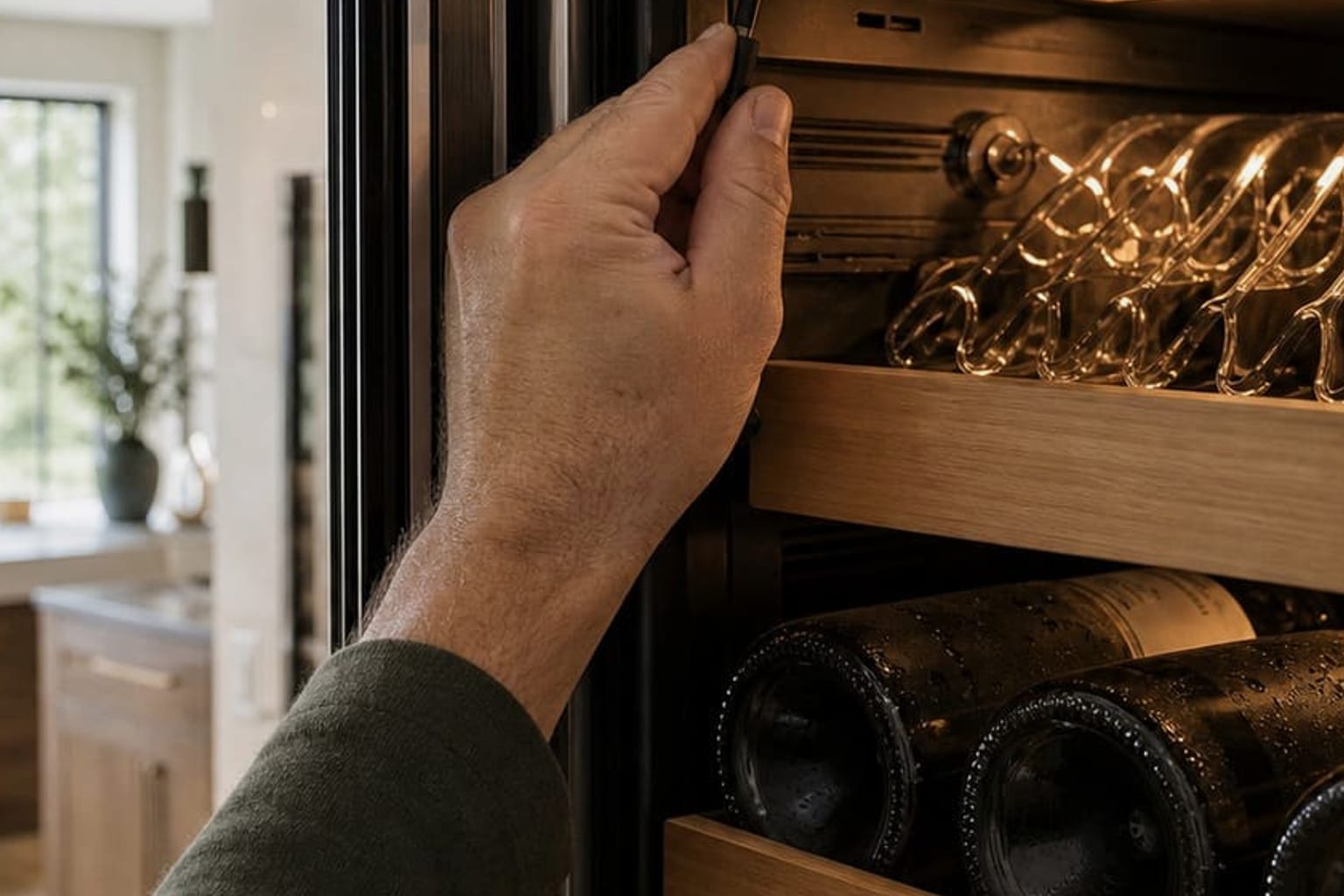
Choose the Sub-Zero wine column if your household stores 40 or more bottles long term, the beverage center if wine shares shelf space with sparkling water and snacks, and refrigerator drawers if the unit will mostly hold produce and overflow from the main fridge. All three claim the same 24 inch undercounter cutout, so in most pantries the decision is one or the other. The UW-24 wine unit, the UC-24BG beverage center and the ID-24R drawers are the models buyers actually compare.
Los Altos butler's pantries and bar walls usually have room for exactly one Sub-Zero undercounter unit, whether the project is an Eichler update in 94024 or an estate kitchen in 94022. After 14 years on refrigeration and wine storage here, I can usually tell which machine a family should have bought from what is crammed inside the wrong one.
Sub-Zero Wine Column or Beverage Center: Which Should You Buy?
The Sub-Zero wine column is a dedicated cellar, and the Sub-Zero beverage center is a general-purpose cooler that trades bottle capacity for flexibility. A column such as the IW-30 gives you two independently controlled zones, UV-resistant glass and racking designed so labels never rub. Nothing else goes inside, and that is the point: storage holds a steady 55F all week.
The Sub-Zero beverage center earns its place in households that entertain casually rather than collect. The UC-24BG splits its interior between wine racking and adjustable shelving for cans, mixers and cheese, so it wins in family rooms and pool houses. If a case rarely survives six months in your house, convenience beats precision.
How Many Bottles Does Each Undercounter Unit Really Hold?
The Sub-Zero UW-24 undercounter wine unit stores 46 bottles across two zones, roughly triple what a beverage center manages once cans and mixers move in. The full-height IW-30 column stretches capacity to 86 bottles, the difference between a working rotation and a real collection. Owners routinely buy on looks and discover the shortfall at their first dinner party.
The Sub-Zero refrigerator drawer pair measures capacity in produce and platters rather than bottles. An ID-24R delivers about 5 cubic feet of true refrigeration at fresh-food temperatures, and the ID-24C combination adds a freezer drawer below for entertaining ice and appetizers.
Which Unit Fits a Los Altos Eichler or Estate Pantry?
The Sub-Zero wine column is the wrong answer in most Eichler remodels, and the beverage center is usually the right one. Eichler kitchens in south Los Altos, 94024 especially, run tight galley footprints on radiant slabs, so a tall column steals scarce wall space while a 24 inch undercounter unit slips beneath the original counter line.
Estate kitchens in 94022 flip that logic for the Sub-Zero wine column. A butler's pantry with a long bar wall can absorb an IW-30 and still leave room for drawers near the prep sink, and panel-ready fronts let every unit disappear behind cabinetry. The real constraint in those houses is service access: leave clearance to pull the unit forward, or every future repair gets harder.
Refrigerator Drawers: The Third Option Most Kitchens Overlook
Sub-Zero refrigerator drawers solve the one problem the other two units ignore: daily overflow from the main refrigerator. Drawer units running 34 to 45F swallow farmers market produce boxes, school lunches and party trays, jobs no wine rack can touch. Families with kids often open the drawers more times a day than the big fridge.
Sub-Zero drawer units also carry the most service-sensitive design of the three. Two independent drawer gaskets take daily abuse, and the condenser coil breathes through a low toe-kick grille that collects pet hair and pantry dust quickly. I recommend a condenser cleaning every 6 to 12 months on drawer installs, roughly twice the attention a sealed wine column needs.
What Will Running and Repairing Each Unit Cost Over Time?
The Sub-Zero beverage center is typically the cheapest of the three to keep running, and the wine column costs the most to fix when its sealed system finally ages out. Gasket, fan and thermostat repairs on any undercounter unit sit at the cheaper end of a repair visit; sealed-system work on a dual-zone column sits at the pricier end because two evaporators share one compressor.
Sub-Zero service pricing in Los Altos is simple to plan around: the diagnostic visit is $89, waived when you go ahead with the repair. Whichever unit you pick, budget one professional maintenance appointment a year. Clean condenser coils alone prevent most of the compressor failures we see on undercounter units younger than ten years.
Match the Machine to What Your Household Actually Chills
The Sub-Zero unit worth buying is the one that matches your real inventory, not the showroom's suggestion. Before a Los Altos client commits, I have them count what currently lives in the kitchen fridge that should not: 20-plus bottles points to the wine column, a wall of sparkling water and juice boxes points to the beverage center, produce and leftovers point to the drawers.
Sub-Zero build quality means the choice stays with you for 15 to 20 years, so buy for the household you are, not the one you host twice a year. When an existing unit limps rather than dies, a repair visit resets the decision clock; most I see are still worth fixing past year twelve.