

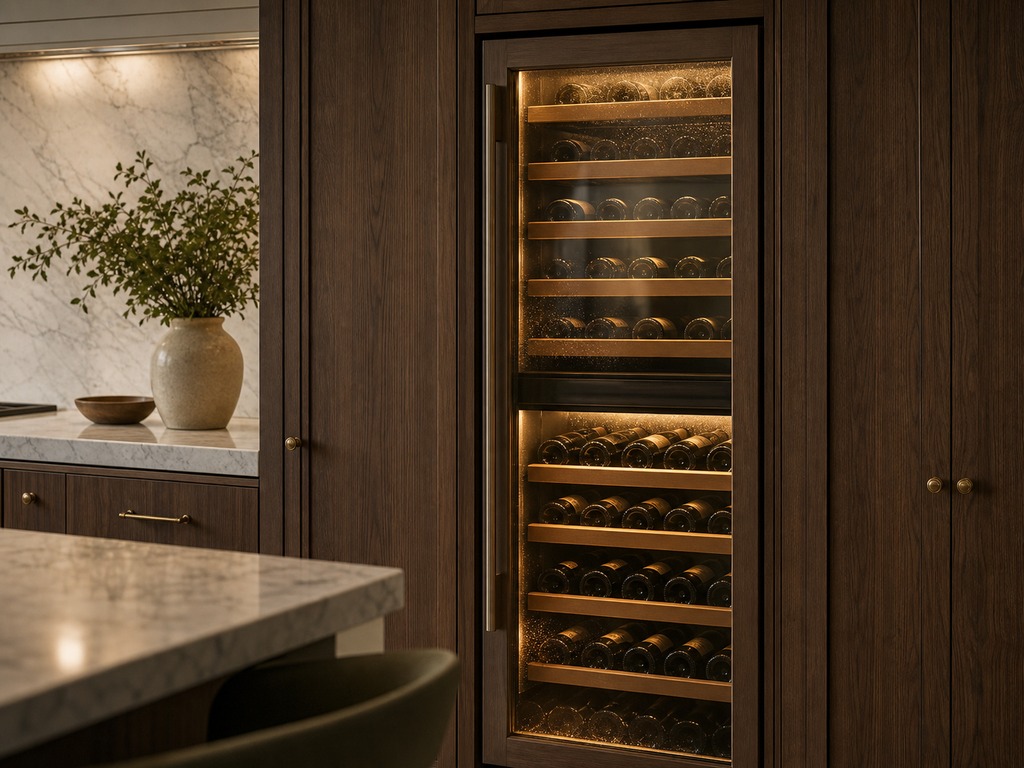
A wine collection is patient until it isn't. A Sub-Zero column can sit two or three degrees off its setpoint for weeks, and the bottles inside give nothing away until a cork pushes or a red tastes tired. By then the question isn't "is something wrong" — it's "how long has it been wrong."
We get these calls all over Los Altos, from the older homes off University Avenue to the larger Country Club kitchens where a dedicated wine column sits alongside the refrigerator and ice maker. The good news is the same most weeks: a column that drifts warm is rarely the catastrophe owners fear. Here is what's actually happening inside, and why the fix is usually a bounded one.
Two zones, one cabinet — and why that's the weak point
A Sub-Zero wine column isn't a small fridge with a lock on the door. It runs independent dual zones so a Burgundy at cellar temperature can sit above a Chardonnay held cooler, each on its own setpoint. That split is managed by a damper that meters cold air, a circulation fan, and a separate thermistor watching each compartment. When a column 'drifts warm,' nine times out of ten it's one of those three parts misbehaving in a single zone — not the sealed system letting go. A drifted thermistor reads the zone as colder than it is, so the unit under-cools and the zone climbs; a sticky damper starves one compartment while the other holds perfectly. Either way, you see a warm zone, but the refrigeration is healthy.
Heat, dust, and a Santa Clara County summer
The column sheds heat through a condenser, and that condenser has to breathe. In a Los Altos estate kitchen the unit is usually built tight into millwork, so the grille is easy to forget for years while cooking dust and lint load the coil. Add a string of warm inland afternoons — Los Altos runs noticeably hotter than the coast in July and August — and a partly blocked condenser that coped all winter suddenly can't keep up. That's the most common 'my wine cooler is getting warm' call we take in summer, and it's also the cheapest to put right. A loaded condenser makes the compressor run long and hot, which looks alarming on the bill but is fixed with airflow, not a rebuild.
The seals, the glass, and the quiet enemy: vibration
Three smaller things age a collection without ever throwing a fault code. The door gasket, if it's gone stiff at the corners, lets warm kitchen air leak in and drags the humidity off target — corks dry, or the glass fogs. The UV-tinted glass door is doing real work shielding wine from light, so a cracked seal around it matters more than it looks. And vibration is the one owners never suspect: Sub-Zero uses a deliberately low-vibration compressor precisely because shaking disturbs sediment and tires wine over time. A new buzz or rattle usually means worn compressor mounts or a tired fan — a genuine repair, but a contained one — long before it means the sealed system itself.
Repair or replace? Run the math before you panic
Because a wine column is built into the cabinetry with custom panels, replacing it means a millwork job on top of the appliance — which is exactly why most are worth repairing well past the point you'd replace a freestanding cooler. A sensor, damper, fan, gasket or control board is a bounded fix on a unit engineered to run fifteen-plus years. The one honest exception is a major sealed-system failure on a much older column: there we'll put the numbers in front of you and sometimes tell you it's time, rather than sell a repair the gauges don't justify. Our $89 service call is waived with the repair, so a real diagnosis never costs you twice. Reach us at (650) 668-1172 or book online.