

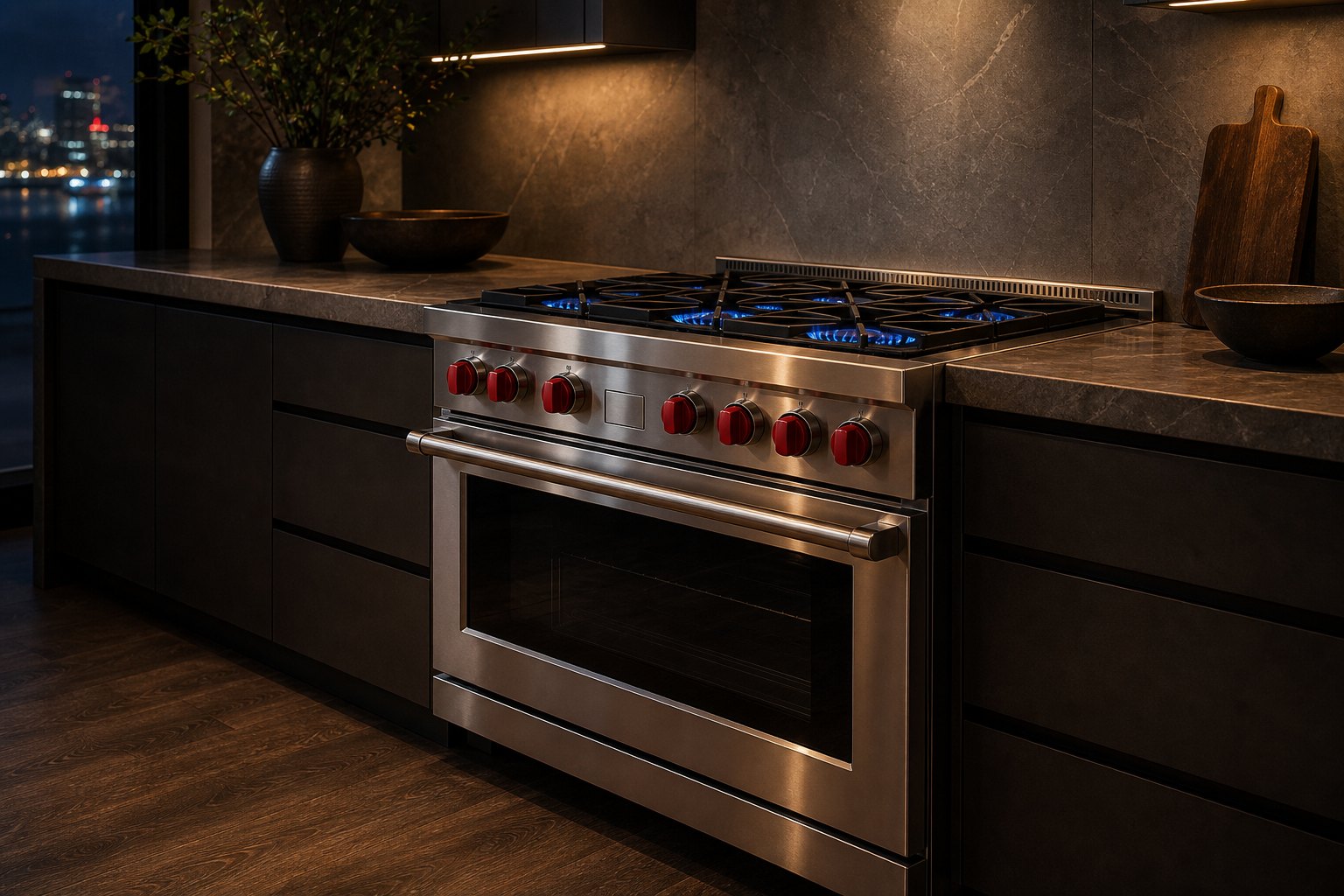
A Wolf range is the centerpiece of a lot of Los Altos kitchens, and it earns that spot — these are serious cooking instruments. One point worth settling first: Wolf builds cooking equipment, ranges, ovens and cooktops. The built-in refrigeration in the same kitchen is its sister brand, Sub-Zero. We service both, but they are different machines with different needs.
Here is how to keep a Wolf range cooking the way it did the day it was installed.
Keep the sealed burners breathing
The red-knob sealed burners are the signature of a Wolf range, and they reward a little routine care. Lift the burner caps when they're cool and wipe away spillover, and make sure each cap sits flush and level when it goes back. A cap that's even slightly off-seat changes the flame pattern and is the most common reason a burner seems to 'cook unevenly.' It takes two minutes and prevents most of the burner calls we get.
Clicking but slow to light is usually moisture
If a burner clicks and clicks but is slow to catch, the usual cause is moisture or spillover bridging the spark gap — not an expensive part. Dry the area, lift and re-seat the cap, and let it air out. A burner that still chatters once it's clean and dry typically has a corroded electrode or a tired spark switch, which is a clean, bounded repair with a genuine part. It is almost never the control board, and we test before replacing anything.
Mind the dual-fuel oven's calibration
Many Los Altos Wolf ranges are dual-fuel: gas burners over an electric convection oven. That oven holds temperature beautifully, but if your baking starts running hot or cool against the dial, it's usually a calibration drift or a tired oven sensor rather than a failed element. It's worth confirming with an oven thermometer before assuming the worst — the fix is often a recalibration or a single sensor.
What to leave to a technician
Cleaning, re-seating caps and a simple thermometer check are fair game. Gas-carrying components, the igniter module and the oven's electrical elements are not — that's where a guess gets unsafe. If a burner won't light at all, a smell of gas lingers, or the oven won't hold heat, stop and book a visit. The $89 service call is waived with the repair.