

Sub-Zero ice maker repair · Los Altos
Sub-Zero Ice Maker Repair in Los Altos
- Clear-ice columns & in-fridge makers
- $89 service call, waived with repair
- 365-day warranty on all labor
- Los Altos & nearby Peninsula
Quick answers
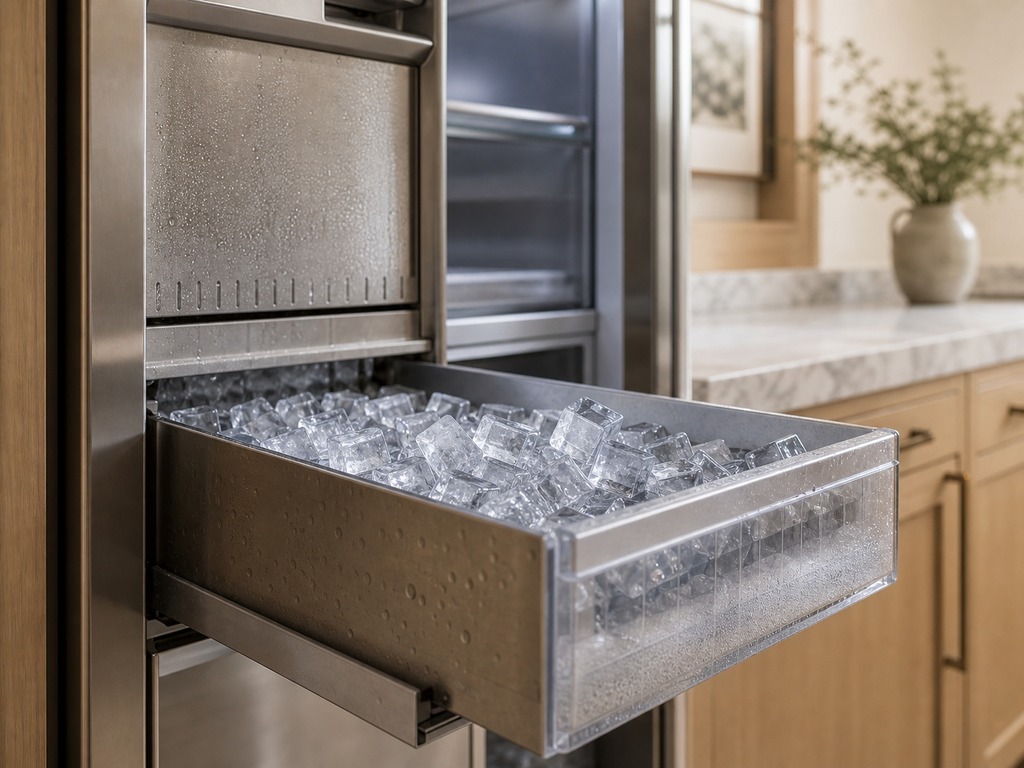
Ice maker acting up? Start here
- No ice at all?
- The cycle has stalled somewhere — a closed or scaled fill valve, a frozen supply tube, a tripped shut-off arm, or a control that has stopped calling for a harvest. We trace the cycle end to end instead of swapping the whole module.
- Ice coming slowly?
- A clear-ice maker freezes deliberately slowly, so a warm kitchen, a dust-loaded condenser or weak Peninsula water pressure all stretch the cycle. We measure fill volume and harvest time before blaming the module.
- Small or hollow cubes?
- That is almost always a fill problem — a partly open valve, low pressure or scale narrowing the inlet — so the mold never fills completely before it freezes and harvests.
- Water leaking near the unit?
- Usually the saddle/shut-off valve, a cracked fill tube or a loose compression fitting rather than the ice maker itself. We find the drip source and stop it before it reaches your flooring.
How it actually works
How a Sub-Zero clear-ice maker makes a cube
A Sub-Zero clear-ice maker is a small refrigeration loop in its own right, and understanding the four steps it runs makes every fault easier to place. First, the water inlet (fill) valve opens for a measured few seconds and meters water into the mold. Second, the unit freezes that water unusually slowly and circulates it as it goes — that is the trick behind the gourmet "clear" cube, because freezing gently pushes dissolved air and minerals out instead of trapping them as the cloudy core you get from a cheap tray.
Third, once the slab or cube is solid, a mold heater warms the metal just enough to release the ice, and the harvest mechanism — an ejector or a tipping mold — drops it into the bin. Fourth, a thermostat or sensor and a bin-level shut-off arm decide whether to run the cycle again or wait. A dedicated built-in ice column adds its own condenser and fan to all of this, which is why the ice columns we see in larger Country Club and Old Los Altos kitchens behave more like a tiny refrigerator than the simple maker tucked inside a fresh-food cabinet.
When ice stops or slows, the fault is almost always in one of those four stages — fill, freeze, release, or the control that ties them together. Pinning down the stage is the whole job, and it is what keeps a Sub-Zero ice repair a bounded, single-part fix instead of a guess at the most expensive component.
Symptom → cause → fix
What each ice maker symptom usually means
A quick map of the ice-maker faults we diagnose most across Los Altos built-ins and dedicated ice columns.
| Symptom | Likely cause | What we do |
|---|---|---|
| Producing no ice at all | Fill valve, frozen supply line, shut-off arm or control | Test water supply and valve, thaw and verify the line, confirm the control is calling for a cycle |
| Slow or short on ice | Warm ambient, loaded condenser, low water pressure | Clean the condenser on a column, check pressure, time the freeze and harvest against spec |
| Small, thin or hollow cubes | Partial fill: scaled or weak valve, low pressure | Measure fill volume, descale or replace the inlet valve, recheck cube size |
| Cloudy or off-tasting ice | Old filter, stagnant water, mineral scale | Replace the filter, flush and purge the line, clean the mold and bin |
| Ice clumping in the bin | Slow harvest, warm bin or melt-refreeze | Check harvest timing and door seal, confirm the bin holds temperature |
| Water on the floor or cabinet base | Saddle valve, fill tube or fitting leak | Locate the drip, replace the failed fitting or tube, confirm it stays dry |
We confirm the exact stage on site — no part is replaced on a guess.
Columns vs in-fridge makers
Dedicated ice columns, wet bars and butler’s pantries
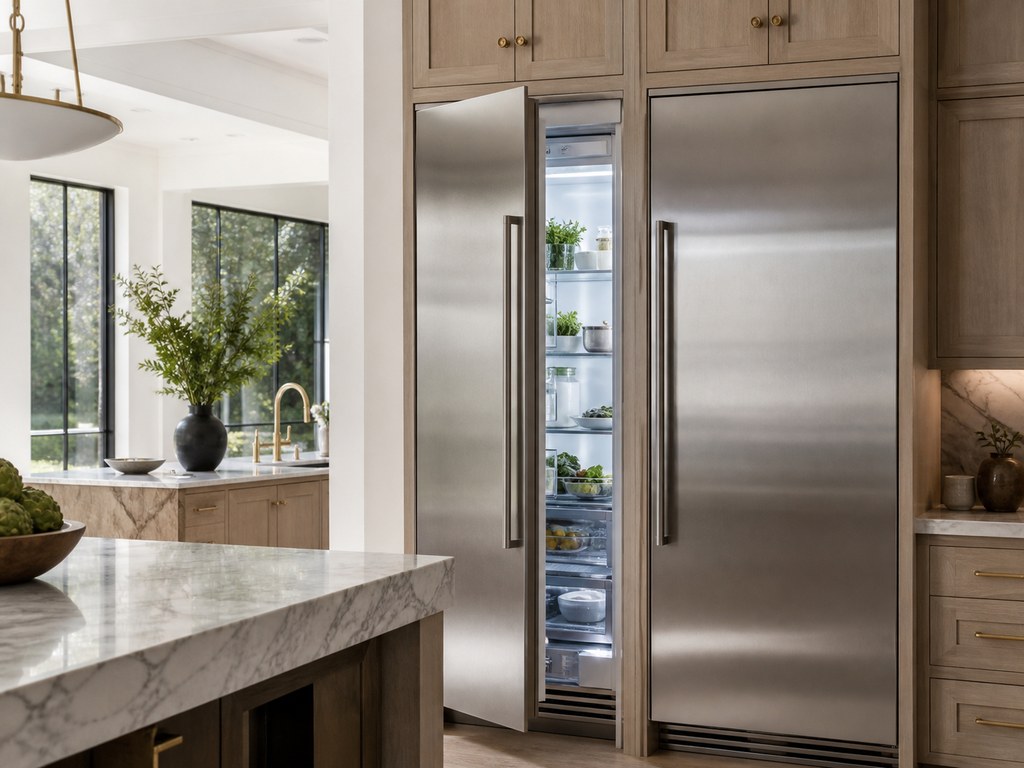
The estate kitchens around Old Los Altos and the Country Club neighborhood rarely rely on the modest ice maker built into a fresh-food cabinet. More often there is a dedicated clear-ice column next to the refrigerator, sized for entertaining, and a second under-counter maker in a wet bar or butler’s pantry for guests. Each is a different machine. A standalone ice column has its own sealed system and condenser, so a slow-ice complaint there frequently traces to airflow and a dust-loaded coil — not the harvest module at all.
The under-counter and bar units, by contrast, sit in tight cabinetry and lean heavily on a clean drain and a healthy pump; ice that clumps or a unit that smells stale is usually a drain-and-purge job. When you call, tell us which unit is misbehaving — the tall column, the maker inside the refrigerator, or the bar unit — because it points us straight at the right design and the right parts. If you are not sure which series you have, our model number guide shows where the tag hides inside the cabinet.
Local realities
Hard water and warm Los Altos summers
Two local conditions shape most of the ice calls we take here. The first is water hardness. Santa Clara Valley supply carries enough dissolved mineral that, over a few years, scale builds inside the fill valve and on the mold — narrowing the inlet so cubes come out small or hollow, and dulling the clarity these makers are prized for. A descale and a filter change often restore a unit that owners assumed was failing.
The second is summer heat. Los Altos runs noticeably warmer inland than the coast through July and August, and a clear-ice maker is sensitive to ambient temperature because it freezes slowly by design. A condenser already loaded with cooking dust loses its margin on a hot afternoon, the freeze stage stretches, and a household that suddenly needs ice for a backyard gathering finds the bin half empty. Clearing the condenser airflow is the cheapest fix we do and heads off most warm-weather "not enough ice" complaints before they become a service module replacement.
Before you call
What to check before you call us
A few safe checks can save a visit, and if they do not, they tell us exactly where to start.
- 1
Confirm the water supply is on
Find the shut-off (often under the sink or behind the unit) and make sure it is fully open. A valve nudged closed during a cabinet project is a common reason a maker quietly stops.
- 2
Check the shut-off arm or bin sensor
If the wire arm is propped up or the bin is jammed full to the sensor, the maker thinks the bin is full and pauses. Lower the arm and clear the bin, then wait a cycle.
- 3
Look and listen for a frozen line or harvest
A supply tube iced solid blocks the fill; listen for the quiet hum of a harvest every few hours. Note whether you hear a fill, a freeze, or nothing at all.
- 4
Reset and time one full cycle
Give the maker time to run one complete cycle and note what happens — then call (650) 668-1172 or book online with that detail so we arrive with the right valve or module.
Typical ranges
Sub-Zero ice maker repair cost ranges
Planning ranges only. Your $89 service call is waived with the repair — full detail is on the built-in repair cost guide.
| Repair | Typical range | Typical time |
|---|---|---|
| Diagnostic service call | $89 | 45–90 min |
| Water inlet / fill valve | $250–$600 | 1–2 h |
| Descale, filter & line flush | $200–$450 | 1–2 h |
| Ice maker module / harvest | $350–$800 | 1–3 h |
| Ice column sealed system | $1,200–$3,200 | 2–6 h + parts |
Planning ranges only; the final quote depends on model, parts, cabinet access and diagnosis.
$89 service call, waived — 365-day labor warranty
You pay a flat $89 diagnostic service call, and it is waived the moment you approve the repair. Every ice maker repair is backed by a 365-day warranty on all labor and manufacturer-spec OEM parts. Call (650) 668-1172 or book online.
Reviews
Sub-Zero ice maker repairs in Los Altos
-
Our built-in refrigerator column stopped holding temperature the week we were hosting. They came out, diagnosed a failing evaporator fan, and had the right Sub-Zero part on the second visit. The $89 service call was applied to the repair and everything is back to a steady 38°F.
-
They pulled our panel-ready unit out without leaving a mark on the white-oak cabinetry — runners down, blankets, the works. Quiet, precise, and they explained the 365-day labor warranty up front. Exactly the kind of careful work an estate kitchen needs.
-
Frost was building on the back wall of the fresh-food side and the fridge ran constantly. Turned out to be a defrost heater and sensor. Clear quote, genuine OEM parts, and the service call fee came off the final bill.
Common questions
Sub-Zero ice maker repair — FAQ
Why has my Sub-Zero ice maker stopped making ice completely?
No ice at all means the cycle has stalled at one stage. The usual culprits are a water supply valve that was nudged closed, a fill valve clogged with mineral scale, a supply tube frozen solid, a shut-off arm propped up so the maker thinks the bin is full, or a control that has stopped calling for a harvest. We trace the cycle from fill to harvest and fix the stage that has failed rather than replacing the whole module on a guess.
Why is my Sub-Zero making small, thin or hollow cubes?
Cube size is set by how much water fills the mold before it freezes, so small or hollow cubes nearly always point to a fill problem. On the Peninsula that is often mineral scale narrowing the inlet valve, but it can also be low household water pressure or a valve that only partly opens. We measure the actual fill volume, descale or replace the valve, and confirm the cubes come back to full size.
My dedicated ice column makes ice slowly in summer — is it failing?
Usually not. A clear-ice maker freezes slowly on purpose, so it is sensitive to a warm kitchen, and Los Altos summers run hot inland. A standalone ice column also has its own condenser, and once that coil loads up with cooking dust it loses cooling margin on a warm afternoon. Cleaning the condenser airflow restores most "slow ice" columns — it is the cheapest fix we do and well short of any sealed-system work.
Do you repair the small ice maker inside the refrigerator and a separate ice column?
Both. Many Los Altos kitchens run a maker inside the fresh-food cabinet plus a dedicated built-in ice column for entertaining, and sometimes a bar unit too. They are different machines: the column has its own sealed system and condenser, while the in-cabinet maker shares the refrigerator. Tell us which one is acting up when you call and we arrive with the right parts for that design.
Why does my ice taste stale or look cloudy?
Cloudy or off-tasting ice is usually a water-quality issue rather than a mechanical fault. An old filter, water sitting stagnant in the line during a slow period, or mineral scale on the mold all dull the clarity and flavor these makers are built for. We replace the filter, flush and purge the supply line, and clean the mold and bin so the ice is clear and clean again.
There is water on the floor near my ice maker — where is it coming from?
Most ice-maker leaks are not the maker itself but the plumbing feeding it: the saddle or shut-off valve, a cracked or kinked fill tube, or a loose compression fitting. Because the water can travel along the cabinet base before it shows, we trace it to the actual source, replace the failed fitting or tube, and confirm the area stays dry before we leave so it never reaches your hardwood or stone.
How soon can you come out in Los Altos for an ice maker repair?
We book the soonest realistic appointment, often within a day or two, and confirm a time window rather than an unrealistic same-hour promise. Tell us the symptom and which unit is involved when you call (650) 668-1172 or book online, and the $89 service call is waived when you approve the repair.
Keep reading
Related guides & services
Get your Sub-Zero ice maker producing again
Call an experienced built-in specialist or book online. $89 service call, waived with your repair — and a 365-day labor warranty.